Enlightened Protestantism: How Christians Justified the American Revolution
Charles Miller
Most Americans are familiar with the traditional story of the American Revolution: as the British government grew increasingly tyrannical, they inflicted abuses upon the colonists that compelled the people to throw off the yoke of tyranny, eventually creating the freest and most prosperous country in the world. Although this simplified story of the Revolution conveys certain truths, it is woefully incomplete. To start, only about forty-five percent of the colonists actually identified as Patriots—that is, in opposition to the Crown of England—with the rest roughly split between Loyalists and noncommittal.1 Considering these demographics, it is often easy to forget the radical nature of rebellion against one’s mother country for the individual Patriots, especially those intellectuals among them who sought to morally justify the Revolution through Christian tradition and contemporary political thought. Beginning with an analysis of Scripture and Catholic just war theory, I will argue that the justification for the American Revolution’s moral legitimacy was not traditionally Christian. I will then trace how Protestant theology, by shaping Enlightened political thought, fundamentally transformed the traditional Christian understanding of authority in the Church and state, furnishing the Colonists with an intellectual justification for revolution.
Authority and Just War Theory
Under traditional Christian thought, which draws from Jesus and St. Paul, those subject to political authority owe deference and obedience to them. In his letter to the Romans, Paul writes,
Let everyone be subject to the governing authorities, for there is no authority except that which God has established. The authorities that exist have been established by God. Consequently, whoever rebels against the authority is rebelling against what God has instituted, and those who do so will bring judgment on themselves …. This is also why you pay taxes, for the authorities are God’s servants, who give their full time to governing. Give to everyone what you owe them: If you owe taxes, pay taxes; if revenue, then revenue; if respect, then respect; if honor, then honor (Rom. 13:1-2, 6-7 Revised Standard Version Catholic Edition).
Jesus, similarly to Paul, when asked by the Pharisees “Is it lawful to pay taxes to Caesar, or not?” responds:
“Whose likeness and inscription is this?” They said, “Caesar’s.” Then he said to them, “Render therefore to Caesar the things that are Caesar’s, and to God the things that are God’s” (Matt. 22:17-21 RSVCE).
These passages form the basis for the traditional Christian understanding that civil authorities possess a divinely-instituted legitimacy and that people therefore owe obedience, honor, and respect to civil leaders. This principle does not imply unconditional submission as it was recognized that rulers could forfeit their legitimacy through manifest, grave injustice. Nevertheless, because authority is traditionally understood to come from God, rebellion requires extraordinary moral justification. Not only is rebellion a rejection of leaders who have been “established by God,” it also entails violent warfare and thus must meet the requirements for a just war. Recognizing the horror of war and informed by the warning of Christ to Peter that “all who take the sword will perish by the sword” (Matt. 26:52 RSVCE), the Church has historically been highly cautious about what is deemed to be a just reason for going to war. In synthesizing and developing the ancient writings of Augustine and Aquinas, the Catholic Church teaches that a just war must meet the following conditions:
The damage inflicted by the aggressor on the nation or community of nations must be lasting, grave, and certain; - all other means of putting an end to it must have been shown to be impractical or ineffective; - there must be serious prospects of success; - the use of arms must not produce evils and disorders graver than the evil to be eliminated.2
All these conditions must be met to justify a military pursuit. So, in regards to the American Revolution, we must ask: do the high taxes experienced by the colonists justify military rebellion? Were all other means of avoiding the armed conflict exhausted? Was the threat of Britain lasting, grave, and certain? From a global perspective, was Britain as tyrannical as claimed by the Founders? For centuries, historians, theologians and scholars have debated these very questions, all of which would require a much longer piece to settle. What I argue in this essay is not that the revolution was necessarily unjust but that traditional Christian doctrine was not the source of the Founders’ justification for revolution. The traditional Christian presumption is in favor of obedience to political authorities, a hurdle that must be cleared in discerning the morality of rebellion.
The Protestant Revolution
If traditional Christian political theology placed such a strong presumption in favor of obedience to civil authority, how did the overwhelmingly Protestant Colonies come to regard the revolution not only as politically expedient but as morally justifiable? The answer lies in the profound transformation in the role of authority brought about by the Protestant Revolution. While the reformers did not reject political authority, their understanding of the relationship between the individual and Church fundamentally altered the way that authority itself was understood in Christian Europe, leading to the Enlightenment, which laid the political foundation for the intellectual justification of the American Revolution.
When analyzing the relationship between the Church, the state, and the individual, the fundamental nature of the relationship boils down to authority. What authority is an individual morally responsible for submitting to? Do authority figures have a divine right to rule, or is their rule contractually based? For context, it is important to realize how intrinsically linked Church and state were in Medieval Europe. Bishops and kings ruled together. While both ruled different domains of public life, their authority was intrinsically linked, both ultimately coming from God. Even after the Protestant Revolution in England, English kings and nobles chose not to abolish the Bishopric in the Anglican Church for fear that it would inevitably undermine their own authority. Kings had a divine right to rule, just as ministers of the Church had a divine right to guide the faithful in religious matters.
When Luther published his 95 Theses in 1517, he began the greatest political and religious upheaval since the fall of Rome. While many forms of Protestantism swiftly arose, they all had one thing in common: they rejected the traditional authority of the Catholic Church in its doctrine and rule. This change fundamentally reshaped the way that European intellectuals thought about authority. Spiritual authority was no longer in the hands of an infallible Church that was appointed by God to guide the faithful, instead resting upon Scripture alone, particularly, the individual’s interpretation of Scripture. It is hard to overstate how dramatic this shift is. Although Protestant Churches arose in Protestant countries, the infallible authority of Rome rejected by Protestants created a void in religious life. If the supposed divine authority appointed by God in the spiritual life (the Catholic Church) can lead the faithful astray, then the people have not only the right but the duty to reject this authority. If this is true for the spiritual, it is not hard to see how this could be transferred to the political.
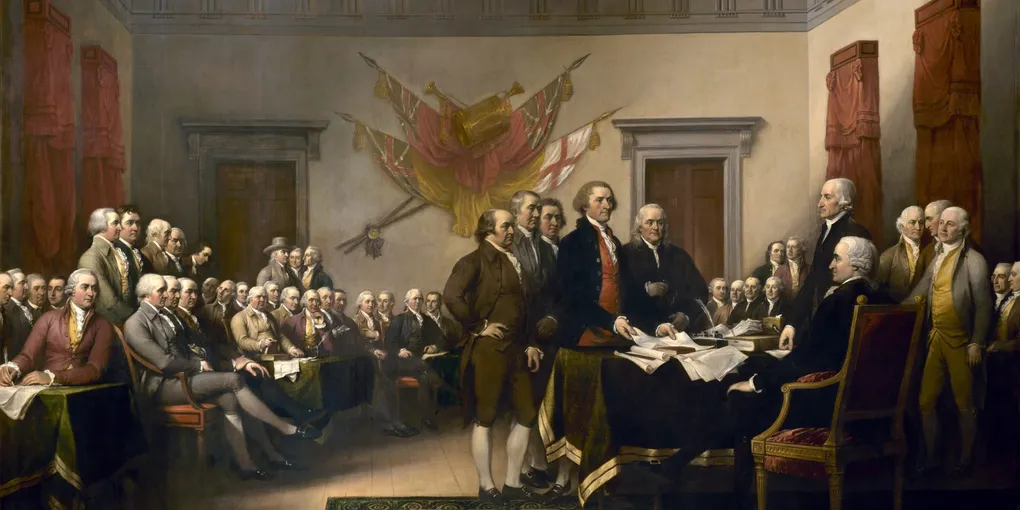
Later Protestant traditions—including John Calvin, Theodore Beza, and Samuel Rutherford—continued the development of Protestant religious and political thought, questioning the role of political and religious authority and increasing the scope of when it was permissible to reject the authority. If spiritual authority is negotiable, then so is political authority. If political authority is negotiable, there must be systems of thought that guide the relationship rulers have with the people. Enlightenment thinkers, particularly John Locke and his social contract theory, arise out of this tradition. The social contract theory rests on the principle that the people and the civil authority exist in a contractual relationship where civil authorities must uphold the freedoms of the people in exchange for the submission of the people. If the government breaks this contract, it has abdicated its responsibility and become a tyranny, and the people have the right to throw off the government and establish another. This is seen directly in the opening words of the Declaration of Independence: “When in the Course of human events, it becomes necessary for one people to dissolve the political bands which have connected them with another, and to assume among the powers of the earth, the separate and equal station to which the Laws of Nature and of Nature’s God entitle them.”3 The Founding Fathers justified the Revolution on the grounds that authority had been abused, and thus they were entitled to rebellion. Authority is conditional, and if it violates its purpose, it loses its legitimacy. As Americans, it’s tempting to take the default position that this is a legitimate moral justification for Revolution, but this is not a justification that would be provided by traditional Christian thought. As Paul writes, “Whoever rebels against the authority is rebelling against what God has instituted, and those who do so will bring judgment on themselves” (Rom. 13:2 RSVCE).
Some readers may argue that I focus too much on the role of religion when there were many other important intellectual justifications for the American Revolution. I do not deny that other reasons played a role, but this objection risks viewing history through the lens of modernity. Because religion does not play a significant role in contemporary American politics, it’s easy to project that this was the case 250 years ago. But for centuries, religion was a primary force behind politics and political thought. The question I have sought to examine is not whether this was the only factor, but rather how revolution went from something nearly unjustifiable for Christians to an idea intellectual Christians in the Colonies could justify in relation to Britain—one of the freest societies the world had ever seen.
The answer I propose traces back to the Protestant Revolution. Protestantism destabilized the medieval understanding of authority by denying Rome’s universal spiritual authority. In response to the conflicts that followed, Protestant thinkers developed increasingly sophisticated theories of conditional political authority and lawful resistance. These intellectual conditions led to the emergence of Enlightenment theories of popular sovereignty and contractual authority. While he may not have intended it, Luther changed the assumptions about authority that later thinkers developed into the political philosophy that could morally justify the creation of America. The question of whether the American Revolution is justified under just war theory and Scriptural passages on civil authority is one that would need a few more articles—and maybe a history degree—to settle. But, at the very least, the Lockean Enlightenment justification that was given by the Founders was not on the grounds of traditional Christian views of authority and just war theory. The war’s justification is downstream of the seismic shift in the role of authority that follows the fracturing of Christendom after the Protestant Revolution. The war we celebrate this July 4th is a culmination of two centuries of Protestant political and spiritual thought. This is a Protestant war grounded in Enlightenment principles.
Maybe you are a Protestant, and you rejoice in this; maybe you are a Catholic, and this reality unsettles your inner patriot. But what matters these 250 years later is what America has become. As Paul writes, “We know that in everything God works for good” (Rom. 8:28 RSVCE), so let us take comfort in the providential hand of God, to whom all things are present, who holds reality in the palm of his hand, and who has blessed this country with abundance and prosperity. May God continue to bless this great country and work all things for our good.
Notes
-
“Five myths about the start of the Revolutionary War,” National Constitution Center, April 19, 2024, https://constitutioncenter.org/blog/five-myths-about-the-start-of-the-revolutionary-war
-
Catechism of the Catholic Church, 2nd ed. (Vatican City: Libreria Editrice Vaticana, 1997), sec. 2309.
-
U.S. Continental Congress, Declaration of Independence, July 4, 1776, National Archives, https://www.archives.gov/founding-docs/declaration-transcript