Defining and Encouraging Artistry
The Journal's Arena, Part One
Charles Wilcoxon
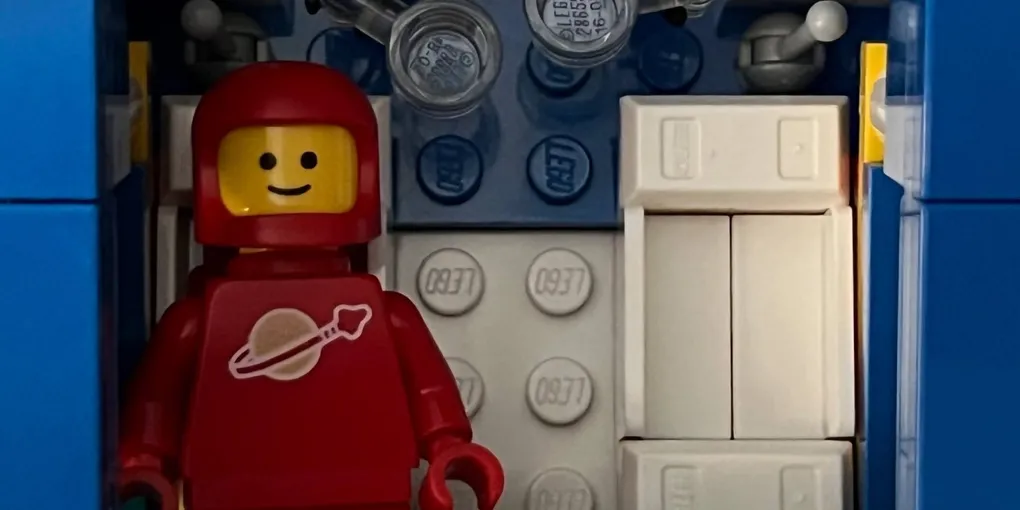
Since my childhood, I have always loved building my own creations with Lego bricks. I love building with others even more, as I often do when my younger cousin, Charlotte, comes to visit. Once, while we were building an island society, she spontaneously began to create a story in verse and rhyme about the Lego Minifigures living on our brick-built island. As she spoke her lyrics into existence, she stumbled a couple of times: a pause to come up with a rhyming word here, a defeated reuse of the word that ended the previous line there. I would not say that the story made much sense. But I was delighted to witness this sudden burst of creativity for its own sake. It has taken me a while to make some sense of that delight I felt; however, I now see that I was reveling in Charlotte’s artistry, an artistry at the same level (if not higher) than many famed creations from historic authors, painters, sculptors, etc. Her artistry reaches this level because, in my view, artistry is detached from quality, only being informed by the internal factors of creation. In this essay, I will explain what constitutes artistry and show my view’s liberating effects for all artists, whatever their skills. It is important to first establish that a creation is not simply art or not art. Any creation instead has a relative degree of artistry in comparison with any other creation. For example, I might claim that the Star Wars television series “Andor” is more artistic than “The Mandalorian,” but I would not claim that “Andor” is art and “The Mandalorian” is not. One problem with the latter claim and its general form is that “art” then becomes too easily a label for creations that appeal to us. Another problem is that, as we will see, a creation is more often the result of various factors with varying sources than it is the product of factors of a singular source. Certain factors from one source may increase the artistry of a creation, while some from other sources may have the opposite effect.
There is another clarification that is necessary: I use the singular “creator” when working toward a definition of artistry, but my reasoning applies in the same way to a body of creators. “Creative team” could be substituted wherever I say “creator.” The kinds of people I have in mind when I use “creator” are the people actually doing the creating in a creative project.
Let us now look at the various factors surrounding something’s creation and how these factors inform the artistry of the creation. There are either internal or external factors for creation. I will start with the external factors for creation. When a creator is externally motivated to create, he is incentivized by someone other than himself. Perhaps he is working for a large (or modest) commission; or he is asked to make something for his city to display in a public space; or he is asked by a friend to paint her dog. These kinds of external factors are motivational: they initiate the desire in the creator to create. Then there are external factors that are limiting. A board of corporate executives may oblige a filmmaker to include a specific moment that checks a desired demographic box; a city may oblige a mural painter to include specified buildings in his painting; Roman nobles living out a Catonian life of severity might oblige a sculptor to make them appear grumpier than they are in reality. There are many such examples of limiting external factors for creation, and all of them affect the properties of the final creation. External limiters shift decision-making from creator to sponsor. A crucial dynamic that underscores external factors, both motivational and limiting, is that of a client and service provider. The client funds the work with a broad idea in mind, externally motivating the creator, and may leverage his patronage to shape the creation process, causing the creator to limit his creation in the way the client sees fit. As we see in both external limiters and motivators, what indicates a factor’s externality is its source being outside of the creator, and these factors impact the creator through external incentives.
Internal factors are similarly either motivational or limiting. When a creator is internally motivated to create, they are prompted by something that has stirred in their soul; something has urged them to grapple with a part of their experience that warrants reflection and representation. It can be hard to give the precise content of internal motivation. Charlotte was internally motivated to speak poetically about her Lego island, perhaps by previous encounters with rhyming verse and wanting to synthesize Lego-based and poetic creation, or rather by a desire to attribute backstory to her imagined society, or instead by something else wildly different from my speculations. Perhaps upon hearing my speculations, Charlotte would tell me that I need to leave the thinkery and stop digging so deeply into things. But I contend that even if Charlotte cannot put her finger on what exactly motivated her to create, and none of my explanations are satisfactory, that is no matter. Something caused a desire in her to create, something present even if she cannot concretely describe it, something coming from within her. Regardless of the content of internal motivators, you can tell they are internal when they are simply not external. And further, you can tell that a creation is internally motivated when the creation is not externally motivated. I never asked Charlotte to compose any poetry; nobody offered her any money for verse. This is not to say that all internal motivation is ambiguous. For example, if an artist gives a good interview on what exactly some of the internal motivators behind his creation were, the internal motivations may be pretty clear. What matters in the end, however, is the non-externality of the motivation. Turning to the other kind of internal factors, internal limiters of creation, like external limiters, pertain to decision-making during the creative process. A creator must decide what to do as he creates, and in so doing, he abandons all alternative courses of action at every step. However, unlike external limiters, internal limiters occur when the creator, not an external actor, makes the decision. Internal limiters may be informed by a gut feeling or by an extensively thought-out weighing of various options. Like internal motivators, the content of internal limiters is not important for their definition; what matters is that internal limiters are not external. We can proceed from here to say that internal factors generally are factors with an internal source, the presence of which can be obvious from mere non-externality.
Now that we have some understanding of internal and external factors of creation, I will look at their effects on a creation’s degree of artistry. Internal factors contribute to a creation’s artistry because they increase the degree to which that creation reflects the experiences of its creator. Even if we have no idea what the exact content of the internal factors of a creation is, we learn more about the creator by virtue of the final creation’s properties as the influence of internal factors on the creation increases. One useful way to think about this might be through the lens of a conversation. Internal factors increase how much a creation, as a conversational tool, authentically relates a creator’s message, worry, or curiosity to his audience. Conversely, external factors decrease a creation’s artistry because it decreases how much that creation reflects its creator’s experiences. Instead of contributing to our learning about the creator, external factors may give us insight into the external actors who affected the creation, but they cannot shed any light on what the creator was trying to get at in creating. To continue the conversation framework, external factors decrease the creation’s authenticity as a conversational tool. I am now pointing toward another important aspect of my view of artistry: artistry is the degree to which a creation can act as an authentic conversational tool in relating its creator’s experiences. I say “degree” for the reason already established, considering that creations are the result of a concoction of many factors, some of which may be internal and others external. A final step before we see this conception of artistry’s liberating effects is to recognize that artistry is not related to quality. I think a common reason for conflating artistry and quality is because in our lexicon, the “art” of something is the practice of performing well within a certain enterprise or creative discipline. The “art” of oration is the practice of giving good speeches, for example. However, a creator can be artistic without having any grasp of the “art” of the discipline he is engaged in. When Charlotte spoke poetically, she had little skill in poetry to draw from. But that is no matter because her reason for speaking at all and the resulting self-imposed limits on her speech are what contributed to the artistry of what she spoke, not whatever skill she employed in crafting her spontaneous poem or the poem’s attendant quality.
Let me give another very different example to illustrate the irrelation between artistry and quality. One claim made by someone conflating artistry and quality might be that something created by A.I. can be artistic, or that A.I. can contribute to a creation’s artistry. The conflater might say this because A.I. (as of April 2026) wields some skill in many creative disciplines, including image generation, writing, and music. Because the A.I. can produce a relatively high-quality creation, it can create something artistic or contribute to a creation’s artistry. For me, this conflation is discredited by its allowing for A.I. to be labelled “artistic.” That result is one I refuse to accept. The conception of art I have been presenting so far renders A.I. antithetical to artistry. A.I. is not conscious, so it cannot be influenced by any internal factors. The external motivation of A.I. creations comes from the prompt. A.I. only creates in response to something telling it to; it never creates spontaneously or without instruction. The external limiters of A.I. creations come from whatever parameters the prompt gives and the patterns the model detects as it accounts for the inconceivable amount of human creation that it has access to. And this pattern recognition itself comes from an external algorithm, meaning one that is neither made by nor able to be changed by the A.I.. Nothing created by the A.I. can be an authentic conveyor of the A.I.’s experiences: the A.I. cannot experience anything. Thus, nothing created by A.I. can be artistic by virtue of its being created by A.I., and the degree to which an A.I. contributed to a creation and that creation’s degree of artistry have an inverse relationship. But A.I. often yields creations of great quality. Artistry and quality, therefore, can have no relation because the extension of that proposed relation to the A.I. case is unacceptable: it exalts a predictive model as an artist.
A.I. is so appealing to us because it gives creators who lack command of the “art” of whatever creative discipline they are engaged in a way to immediately get a final product of relatively high quality. It is an easy solution to the humiliation of poor skill as a barrier to entering a creative discipline. In reality, however, when prompting A.I. to create something you envision, you are not entering any creative discipline other than prompt writing. Even worse for the creation’s prospects for being artistic, you are not even asking another human to bring your creative idea to life, thus depriving the creation of internal limiters that could contribute to its authenticity as a relator of some human’s experience.
But my view of artistry gives creators who aspire to command the “art” of a creative discipline the liberty to engage in that discipline now, no matter the quality of their creation, knowing that their creation remains artistic inasmuch as it is informed by internal factors. Charlotte had the freedom to create artistically because she was unburdened by concerns for quality. With my view of artistry in mind, the aspiring painter, playwright, or poet is free to start creating at whatever skill level he begins at because he is not worried about his creation being low in quality. Instead, he is eager to create regardless of the final product, knowing that in creating artistically, he can make some sense of his experiences through whatever medium he chooses. It is so easy to leave artistic pursuits untried because of low current skill or paralysis in the face of mounting creative decisions to be made or both. My view of artistry encourages all creators to try, poorly if they must, and be fulfilled in the truly artistic conversation we achieve through internally motivated and limited creation.
So start creating now. Make something for no other reason than that you are responding to something stirring up deep within you. Make decisions on your own about how your creation takes shape, choices that are not informed by anything other than what you think is best for telling us about what you are grappling with in your creation. Release yourself from the self-imposed fetters of concern for quality. Reject A.I. because it is alluring in terms of quality but worthless in terms of artistry. Then, you can experience the joy of creating with the levity of unbridled artistry and of consuming the artistry of other authentic creators. Charlotte’s poetry was not a joy to listen to because she was a poetic virtuoso, but because she shared with me her artistry: her authenticity in allowing herself to shine through her creation.