'Brideshead Revisited' and Redemption in Times of Despair
Keira Thomas
The modern culture is obsessed with comfort, but nevertheless rejects authentic consolation. The hope and joy once found in religious piety have been mocked as a fantasy, the “opium of the people,” as Marx phrased it.1 Happiness is thus pursued through earthly means, avoiding God at all costs. This separation from the source of authentic goodness can only lead to despair. In Evelyn Waugh’s Brideshead Revisited, the characters are caught in this vicious cycle of trying to escape misery through sin, inevitably leading to hopelessness. Through Divine Providence, however, good can be born from evil. Although the main figures in the story ebb in and out of a myriad of destructive and sinful patterns, they are never rejected by God himself. Brideshead Revisited promotes the inherently Christian idea that redemption can be pursued even in circumstances of despair, providing consolation that can last into eternity.
Sebastian Flyte, a friend of Charles, the narrator, is a member of an aristocratic family and is fixed in a debaucherous cycle of alcoholism and subsequent sins. Sebastian’s family dynamics contribute to his personal struggles, as he is a child of divorce; his father, having committed adultery, left the family when Sebastian was a boy. Sebastian blamed the broken home on his mother, Lady Marchmain, whom he develops a hatred for over time. Sebastian fills voids in his life with substance abuse. At the beginning of the novel, this is seen as a typical youthful approach to alcohol, with Sebastian getting drunk in a carefree, seemingly innocent way. This habit, however, is poisonous, inevitably leading to addiction. Another cause for strife in Sebastian’s life is the Catholic Church, as he has a tormented relationship with the Faith, a situation that is in part the result of his conflict with his mother and general family situation. Furthermore, he realizes that the Church promulgates undeniable truth, but simultaneously refuses to amend his life according to its teachings, viewing his religion as an entity that takes away privileges and pleasures from him. Throughout the entire book, Sebastian is trying to be happy, but is seeking authentic joy through the wrong avenues, namely the bottom of a bottle.
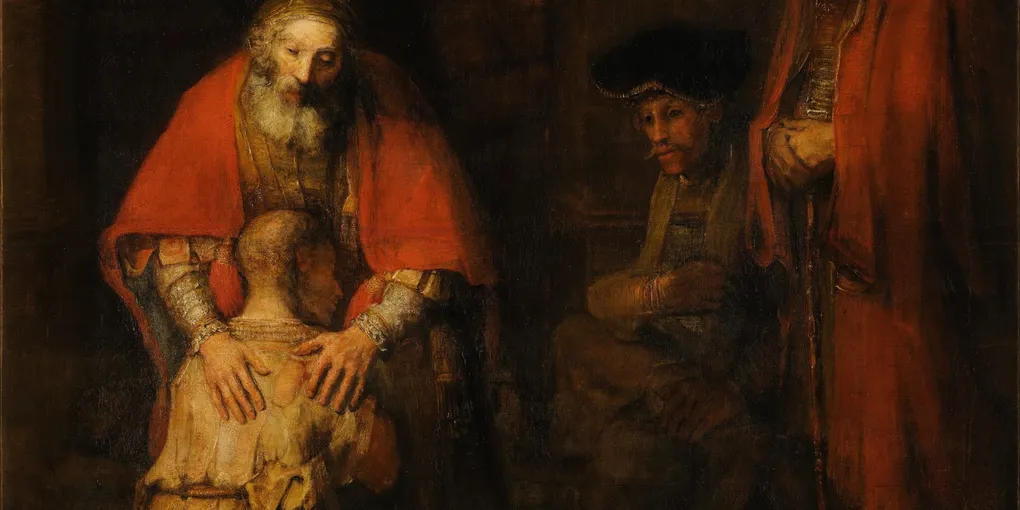
One of the first stages in Sebastian’s essential plunge into darkness is his rejection of his family. Consumed by his addiction and dislike for his mother, Sebastian leaves the country, continuing his worsening alcoholism abroad, ending up bedridden from illness. Sebastian’s state, a result of his drinking, prevents him from seeing his mother before she died. Furthermore, his constant drunkenness leads to his own destitution. His one comfort is an escaped German soldier, Kurt, who is later captured and killed. Fully isolated himself from any friendship and happiness, Sebastian is reduced to a wandering drunk. After years of chances at redemption, Sebastian finally finds solace in the Church. In the depths of his alcohol-induced illness, he is rescued by monks, who recognize his need for physical and spiritual help. After being taken in, Sebastian reconciles with the Church. The monks’ intervention is a case of Divine Providence, as Sebastian’s brokenness and sickness led him back to the Church, which depicts how God’s grace reaches even the most fallen, as Sebastian was allowed redemption even in his complete state of ruin. There were certainly less-desperate moments throughout the novel where Sebastian could have come back to the Church. However, “no one is ever holy without suffering,” a motif that proves true in the case of Sebastian’s reconciliation.2
Julia Flyte, the younger sister of Sebastian, has an early life not much easier than her brother’s; she too is raised in a home ripped apart by adultery and divorce. She too leads a debaucherous lifestyle opposite the Church but cannot bring herself to fully reject the theological truth of Catholicism. Julia’s primary conflict with the Church is in regards to her ambitions for marriage, as she wants to secure the best match possible, regardless of any love that might be or might not be attached. As she is forbidden to marry Protestants and is thus confined to a small pool of candidates, “her religion stood as a barrier between her and her natural goal.”3 Eventually, Julia overcomes her qualms regarding religion when she rashly marries Rex Motram, a divorcee whose marriage to Julia is invalid in the eyes of the Church. However, Julia was soon unhappy in her marriage, leading to her own spiral into misery and attempts to find alternate sources of happiness.
Within the first ten years of Julia’s facade of a marriage, she involved herself in extramarital affairs to escape her own misery. Her life has been tainted by horrible grief, as she had a baby born dead. When speaking to Charles, she reveals that had the baby lived, Julia would have raised her as a Catholic. She says, “That’s one thing I can give her. It doesn’t seem to have done me much good, but my child shall have it.”4 Despite her rejection of the Catholic lifestyle, Julia wanted to give her child a chance at avoiding the irresolvable emptiness she finds in her own life. Later, Julia begins an affair with Charles, who is married, continuing her frantic self-destruction aimed at some imitation of happiness. After one of her Catholic siblings condemns her persistent sin, however, Julia plunges into despair, recognizing the depth of her sin which she believes to be irredeemable. She maintains the idea that there is “no way back; the gates barred”; she sees no way to redemption.5 Believing there is no point to repentance, she continues in her relationship until, once again, tragedy enters her life, as her father, Lord Marchmain, lays dying in her home. Julia realizes that he was likely on a path set for hell, given his past sins of adultery. In addition to grieving for her father, she sees his lack of repentance as symbolic of her own irreconcilable rift with God. Her life as an adultress echoes Lord Marchmain’s sins; if he is not absolved, she believes she has no hope. However, her father does repent, in a near-miraculous deathbed reversion. It is this moment, in the height of her despair, that opens Julia’s eyes to the extent of God’s mercy; redemption is still possible. While her despair does not physically lead her to the Church in the same way that it does for Sebastian, Julia’s identification with her father’s sin and subsequent reconciliation achieves the same effect of reversion. In the end, Julia recognizes the extent of God’s outreach in times of despair and human depravity, saying, “The worse I am, the more I need God. I can’t shut myself out from his mercy.”6
Charles, an atheist, encounters the Church and the Flyte family when he befriends Sebastian at Oxford. Charles is initially attracted by the apparently strong familial dynamics within the Flytes and is fascinated by the complex relationships within Sebastian’s family as well as by the Faith itself. At the beginning, as he sees the Church through Sebastian’s lens, it is no wonder that he can make no sense of Catholicism, as he is surrounded by those who believe the Faith and yet reject its moral teachings. For the majority of the novel, Charles identifies happiness as being the absence of discomfort, a definition that leads him further away from the reality of authentic joy. Charles ultimately departs from the Flytes, ignoring the reality of the Church.
Later in the novel, Charles appears bitter and disenchanted. He enters into a marriage that, for him, is completely devoid of all love and happiness. He is hateful to his wife and, despite his earlier fascination with close families, is an absent father. After being consumed by his own contempt for life, he and Julia begin an affair that, to him, seems like the first real happiness he has had since the days of his friendship with Sebastian. Clinging to this facade of happiness, Charles essentially abandons his family, pursues a divorce, and begins to live in sin with Julia. Charles remains unbothered by his conscience—but as Julia wrestles with her faith, he realizes that her Catholic identity is not as dormant as he had thought, which ultimately threatens their supposed happiness. It is not until Lord Marchmain’s repentance that Charles’ “veil of the temple [is] rent from top to bottom”; it is then that he comes into full awareness, not just of his own faults, but of the total reality of the Catholic Church.7 This sudden realization comes at the same time as Julia’s reconciliation, which in turn brings about the end of their relationship. It is in this time, as Charles is essentially jolted into the acceptance of the truth, that he also loses the only semblance of happiness remaining in his life. Despite his misery, Charles is still able to repent and convert. It is ultimately Divine Providence that brought good out of his affair with Julia; it was his relationship with her that brought him into contact with the truth of redemption through Lord Marchmain’s reversion. Charles, in the earlier parts of the novel, had a plethora of avenues to get to the Church, but it is not until he is so morally depraved that he is finally able to accept the truth of Catholicism. This again proves that redemption is found in cases of utter despair, as seen by Charles’ transformation from utter sin and misery to the pursuit of authentic happiness that the Church promises in eternity.
As seen by the complete states of moral depravity and despair that each of these characters mires themselves in, and by their respective reconciliations, Divine Providence overcomes the most sinful patterns and circumstances. The modern thinker is like Charles, supposing that happiness is just the absence of discomfort. However, in the end, God stands as the only beacon of authentic happiness that shines through the shades of despair and suffering, just as the “small red flame - a beaten-copper lamp of deplorable design relit before the beaten-copper doors of a tabernacle” stands as the redemptive light in this world.8 Authentic piety is not mere avoidance of reality, but rather an identification with Christ’s suffering, offering hope. Christ has defeated sin—despair is no match for His redemption. ⚔︎
N o t e s
- Marx, Karl. Critique of Hegel’s “Philosophy of Right.” 1843. Cambridge, Cambridge University Press, 2009.
- Waugh, Evelyn. Brideshead Revisited. Little, Brown, and Company, New York, 2012, pg. 355
- Ibid, pg. 208
- Ibid, pg. 297
- Ibid, pg. 330
- Ibid, pg. 392
- Ibid, pg. 391
- Ibid, pg. 402